
Graphite Gaskets: A Complete Guide to High-Performance Industrial Sealing
Industrial systems operating under extreme temperatures, aggressive chemicals, and high-pressure media require a sealing material that can withstand the toughest environments. Graphite gaskets are designed precisely for this purpose. Their exceptional heat resistance, chemical stability, and sealing performance make them a preferred choice across oil & gas, chemical industries, power plants, boilers, and refineries.
As a leading manufacturer and supplier, CRI Gasket provides premium-quality graphite gaskets engineered for long-term durability and reliability.
This comprehensive guide covers everything you need to know about graphite gaskets from types and uses to key advantages and selection criteria.
What Is a Graphite Gasket?
A graphite gasket is a sealing material made from pure, expanded, or laminated graphite. It is known for its exceptional ability to withstand extreme temperatures (up to 450°C–650°C and beyond with reinforcement), high pressure, and aggressive chemicals.
Graphite’s unique layered structure provides:
High compressibility
Excellent recovery
Thermal stability
Chemical resistance
Long sealing life
This makes graphite gaskets ideal for environments where rubber, PTFE, or metal gaskets fail.
Why Graphite? The Science Behind Its Performance
Graphite is a crystalline form of carbon with a natural ability to resist:
High temperatures
High pressure
Thermal shock
Oxidation (when treated)
Corrosive media
Its layered sheet-like structure allows it to compress easily and form a tight seal under pressure, without losing flexibility or resilience.
Types of Graphite Gaskets
Industries use various kinds of graphite-based gaskets depending on the application and sealing requirements.
1. Pure Graphite Gaskets
Made from 98–99% pure graphite sheets.
Features:
High thermal stability
Ultra-low under-load creep
Excellent leak resistance
Compressible and flexible
Used in flanges, heat exchangers, and equipment with thermal cycling.
2. Reinforced Graphite Gaskets (Tanged / Flat foil)
These gaskets have a metal core made of:
Stainless steel
Inconel
Carbon steel
Advantages:
Higher strength
Better blow-out resistance
Superior sealing under high pressure
Ideal for petrochemical and refinery environments.
3. Graphite Spiral Wound Gaskets
A combination of stainless steel and graphite filler.
Benefits:
High temperature resistance
Shock & vibration tolerance
Ideal for pipelines and flanges
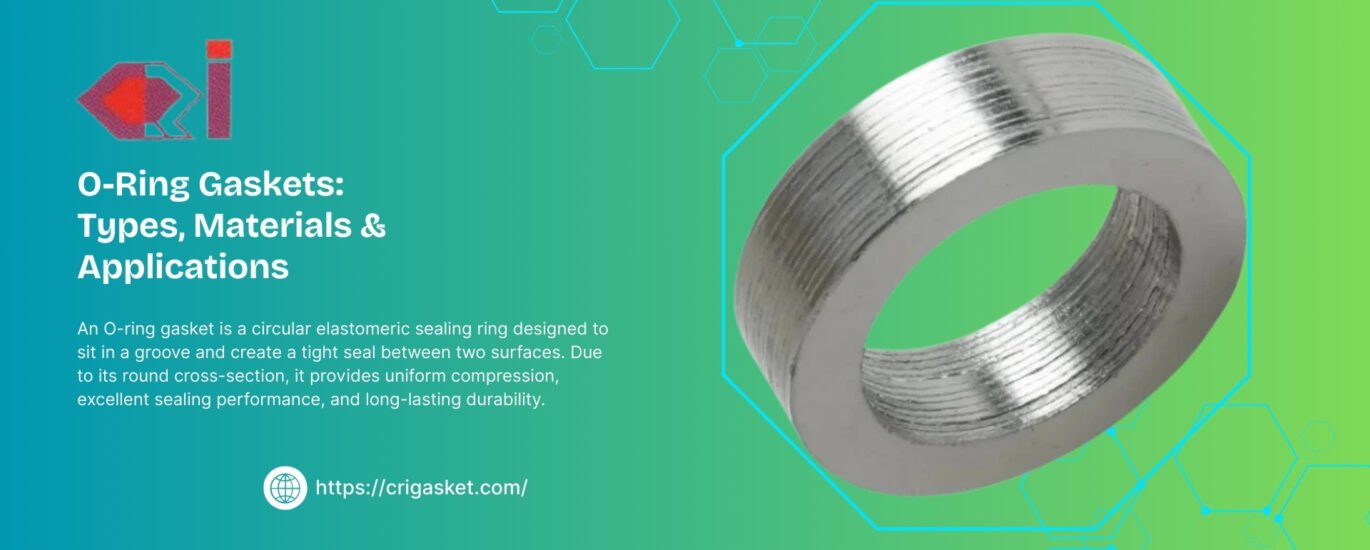
4. Die-Formed Graphite Ring Gaskets
Precision-formed for high-pressure equipment.
Applications:
Pumps
Valves
High-pressure reactors
Steam systems
These rings provide excellent sealing in extreme conditions.
5. Graphite Laminate Gaskets
Graphite sheets bonded with metal layers.
Best for:
High bolt loads
Corrosive environments
High-pressure flanges
Key Features & Advantages of Graphite Gaskets
Graphite gaskets offer several advantages over rubber, fiber, PTFE, and metal gaskets.
1. Extreme Temperature Resistance
Graphite can withstand:
Up to 450°C in oxidizing conditions
Up to 650°C in steam
Up to 3000°C in non-oxidizing environments
Ideal for boilers, steam lines, and high-heat applications.
2. Excellent Chemical Resistance
Stable against:
Acids
Alkalis
Solvents
Hydrocarbons
Steam
Industrial chemicals
This makes graphite perfect for chemical and petrochemical industries.
3. High Compressibility & Recovery
Graphite conforms easily to flange imperfections, ensuring:
Tight sealing
Leak prevention
Long lifespan
4. Fire-Safe & Explosion Resistant
Reinforced graphite gaskets are widely used in fire-safe and explosion-prone zones.
5. Anti-Stick & Anti-Friction Properties
Easy removal even after long-term operation.
Applications of Graphite Gaskets Across Industries
Because of their durability and thermal properties, graphite gaskets are used in some of the harshest industrial environments.
1. Petrochemical & Refinery Industry
Used in:
High-pressure flange joints
Heat exchangers
Reactors
Pipe connections
2. Power Plants & Boilers
Graphite resists high heat and thermal cycling, ideal for:
Steam lines
Boiler connections
Turbine housings
3. Chemical Industry
Perfect for corrosive chemical environments.
4. Oil & Gas Pipelines
Graphite maintains sealing integrity under vibration and pressure.
5. Food & Pharmaceutical Machinery
Graphite does not contaminate or degrade with steam and cleaning chemicals.
How to Choose the Right Graphite Gasket
Before selecting a graphite gasket, consider the following:
Temperature range
- Pressure rating
- Exposure chemicals
- Flange surface condition
- Required thickness
- Reinforced vs pure graphite
- Application type (steam, chemicals, vacuum, pipelines)
For expert assistance in choosing the right gasket, CRI Gasket provides complete technical support.
Why Choose CRI Gasket for Graphite Gaskets?
CRI Gasket is a trusted name in industrial sealing solutions with:
High-quality pure and reinforced graphite gaskets
- Custom sizes and tailor-made solutions
- Precision die-formed graphite rings
- Compliance with industrial standards
- Durable and leak-proof gaskets
- Fast delivery and reliable service
Conclusion
Graphite gaskets are one of the strongest and most reliable sealing solutions for extreme industrial environments. Their resistance to high temperatures, pressure, and aggressive chemicals makes them ideal for boilers, reactors, heat exchangers, chemical plants, refineries, and power generation systems.
With CRI Gasket’s high-performance graphite gasket range, you get unmatched durability, precision manufacturing, and long-term operational reliability. Choose the right gasket today and ensure leak-proof, efficient industrial operations.