
The Complete Guide to Flange Gaskets: Types, Uses & Why They Matter in Industrial Sealing
Industrial pipelines, chemical processing units, oil & gas connections, and mechanical assemblies rely heavily on leak-proof sealing. Among all sealing accessories, flange gaskets are the most widely used and the most critical in ensuring safe, reliable, and efficient operations.
If your industry deals with fluids, gases, steam, chemicals, or high-pressure media, choosing the right flange gasket is non-negotiable. As a trusted supplier of premium industrial gaskets, CRI Gasket offers high-quality solutions tailored for diverse applications.
In this detailed guide, we break down everything you need to know about flange gaskets from their types and materials to installation best practices and industry applications.
What Is a Flange Gasket?
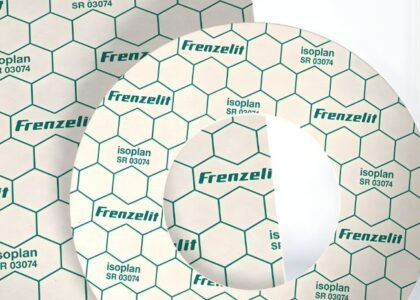
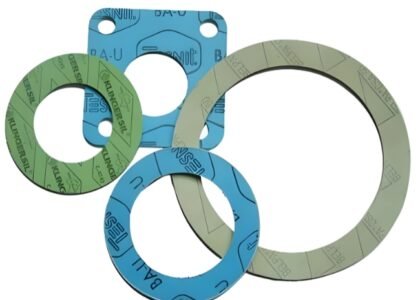
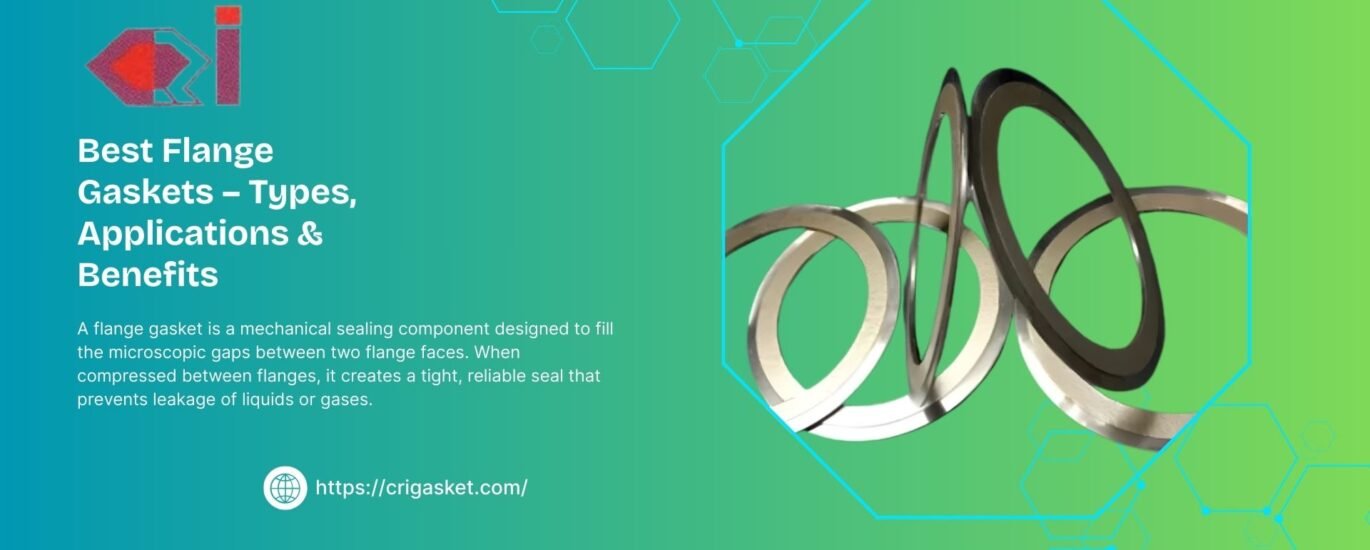
A flange gasket is a mechanical sealing component designed to fill the microscopic gaps between two flange faces. When compressed between flanges, it creates a tight, reliable seal that prevents leakage of liquids or gases.
Why Flange Gaskets Are Essential
Prevent hazardous leaks
Maintain optimal pressure levels
Enhance equipment safety
Reduce downtime and maintenance
Improve system efficiency
Provide resistance against chemicals, heat, and corrosion
Without a proper gasket, even a small leak can result in catastrophic failures, especially in industries handling high-pressure or chemically aggressive media.
How Flange Gaskets Work
When a flange gasket is compressed using bolted pressure, it molds itself to the flange’s surface irregularities. This creates a uniform sealing barrier that can withstand:
High pressure
High temperature
Vibrations
Mechanical stress
Different gasket materials behave differently under stress, which is why material selection is a key factor in achieving a long-lasting and leak-proof seal.
Types of Flange Gaskets
Flange gaskets come in several types based on material, design, and application. Below are the most commonly used types across industries.
1. Spiral Wound Gaskets (SWG)
One of the most preferred sealing solutions for high-pressure & high-temperature pipelines.
Features
Combines metal and filler material
Excellent recovery under fluctuating conditions
High blowout resistance
Used in chemical plants, oil refineries, power plants
2. Ring Type Joint (RTJ) Gaskets
Designed specifically for high-pressure applications such as oil & gas drilling, refinery pipelines, petrochemical units, and offshore equipment.
Advantages
High sealing efficiency
Resistant to extreme temperature and pressure
Made from solid metal such as carbon steel, stainless steel, Inconel, etc.
3. Non-Metallic Flange Gaskets
Materials include:
Rubber (NBR, EPDM, Neoprene, Silicone)
PTFE (Teflon gaskets)
Fiber
Graphite
Ideal for:
Low-to-medium pressure
Water pipelines
Chemical pipelines
HVAC systems
Food & beverage equipment
They are flexible, cost-effective, and corrosion-resistant.
4. Metallic Gaskets
Manufactured from high-strength metals, these are suitable for extreme conditions.
Common types:
Corrugated metal gaskets
Kammprofile gaskets
Solid metal gaskets
They offer excellent durability and are used in:
Boilers
Heat exchangers
High-pressure vessels
5. Compressed Fiber Gaskets (CNAF)
Constructed by compressing synthetic fibers with elastomer binders.
Benefits:
Cost-effective
Easy to install
Suitable for steam, oil, mild chemicals
Flange Gasket Materials: Choosing the Right One
The performance of a gasket depends largely on its material. Below are commonly used gasket materials and their applications.
Rubber (NBR, EPDM, Neoprene)
Best for water, mild chemicals, oils.
PTFE (Teflon)
Chemical-resistant, ideal for aggressive fluids, acids, solvents.
Graphite
Perfect for high-temperature applications, supports thermal cycling.
Metal (SS 304, SS 316, Monel, Inconel)
Used in extreme temperature and pressure environments.
Fiber (Aramid, Cellulose, CNAF)
General-purpose industrial sealing applications.
Applications of Flange Gaskets Across Industries
Flange gaskets are used in a wide range of industries, including:
Oil & Gas
Petrochemical and Chemical
Power Generation
Water Treatment
Food & Beverage
Pharmaceuticals
Marine and Offshore
Heavy Machinery
HVAC Systems
Pulp and Paper
Whether you operate pipelines, heat exchangers, boilers, storage tanks, or reactors, proper gasket sealing is essential.
Advantages of Using High-Quality Flange Gaskets
Using superior-grade flange gaskets such as those offered by CRI Gasket ensures:
Zero Leakage
Maintains system integrity under all conditions.
Higher Safety
Prevents hazardous leaks and reduces chances of accidents.
Lower Maintenance
Durable materials extend the operational life of your equipment.
Cost Efficiency
Reduced downtimes and lower replacement frequency.
Compatibility
Available for all flange standards:
ANSI
DIN
BS
JIS
ISO
Why Choose CRI Gasket for Flange Gaskets?
As a trusted industrial gasket manufacturer, CRI Gasket provides:
Premium-grade materials
Precision-engineered gasket designs
High-temperature and high-pressure resistant seals
All flange sizes and standards
Customized gasket solutions
Fast delivery & excellent customer support
Conclusion
Flange gaskets are essential components in ensuring leak-proof and safe industrial operations. From selecting the correct type to installing them properly, every step plays a key role. With premium-quality solutions from CRI Gasket, industries can achieve long-lasting sealing performance, minimal downtime, and maximum safety.