
Rubber Gasket – Types, Materials, Industrial Applications & Benefits
Rubber gaskets are one of the most commonly used sealing components in mechanical, industrial, pipeline, and fluid-transfer systems. Their flexibility, durability, and chemical resistance make them ideal for sealing joints, preventing leaks, and ensuring safe operation in both low and high-pressure environments.
Industries rely heavily on rubber gaskets for sealing air, gas, water, oil, chemicals, and other fluids. If you are looking for high-performance and accurately engineered rubber gaskets.
In this comprehensive guide, we explain everything you need to know about rubber gaskets:
- Types
- Materials
- Applications
- Advantages
- How to choose the right gasket
What is a Rubber Gasket?
A rubber gasket is a flexible sealing component designed to create an airtight or watertight barrier between two mating surfaces. These gaskets absorb vibrations, compensate for surface irregularities, and prevent leakage of liquids or gases.
Rubber gaskets are widely used because they are:
Highly flexible
Durable
Resistant to chemicals
Easy to install
Cost-effective
Different types of rubber materials are used depending on the application’s temperature, pressure, and chemical exposure.
Types of Rubber Gaskets
Rubber gaskets come in various types based on material composition and intended usage. Here are the most commonly used ones:
1. Nitrile Rubber Gasket (NBR)
Known for its excellent oil and fuel resistance, NBR rubber gaskets are widely used in automotive, oil & gas, and hydraulic equipment.
Best For:
Oils
Fuels
Grease
Petroleum-based fluids
2. EPDM Rubber Gasket
EPDM is an all-weather rubber material with outstanding resistance to UV, ozone, and steam.
Best For:
Water systems
Outdoor applications
Steam sealing
HVAC applications
3. Neoprene Rubber Gasket
Neoprene is a versatile rubber used for general-purpose sealing.
Best For:
Mild chemicals
Refrigerants
Weather sealing
Medium temperature applications
4. Silicone Rubber Gasket
Silicone gaskets handle extreme temperature variations, making them suitable for sensitive equipment.
Best For:
Food & pharmaceutical systems
Medical devices
High-temperature sealing
Cleanroom equipment
5. Viton Rubber Gasket (FKM)
Viton is the most robust rubber material for chemical and temperature resistance.
Best For:
Aggressive chemicals
High-temperature applications
Hazardous industrial environments
Common Shapes of Rubber Gaskets
Rubber gaskets are available in multiple shapes depending on where they are used.
Most common for flanges & pipeline systems.
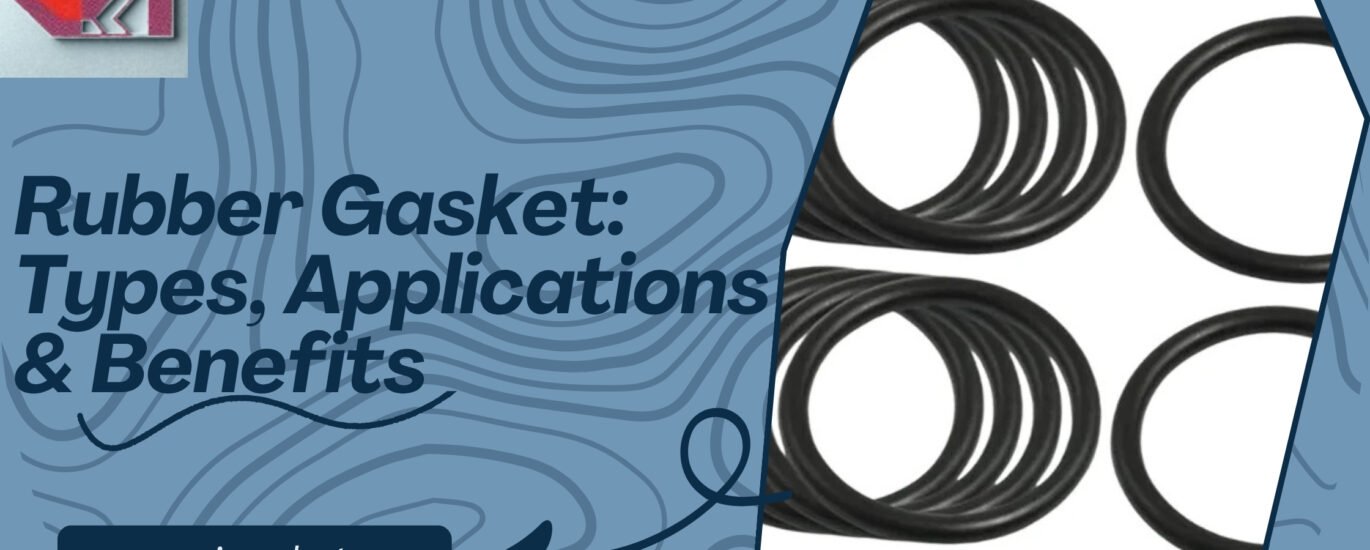
Circular rubber sealing rings used in hydraulic & pneumatic systems.
3. Custom-Cut Rubber Gaskets
Made in any shape (rectangular, square, irregular) based on equipment needs.
Materials Used in Rubber Gaskets
Rubber gaskets are made from natural or synthetic elastomers. The material determines the gasket’s:
Temperature resistance
Durability
Chemical compatibility
Compression strength
Common Rubber Materials:
NBR (Nitrile)
EPDM
Neoprene
Silicone
Viton (FKM)
SBR (Styrene-Butadiene Rubber)
Natural Rubber
Each material serves unique industrial applications.
Applications of Rubber Gaskets
1. Plumbing & Water Supply Systems
EPDM rubber gaskets provide leak-proof sealing for:
Pipes
Valves
Flanges
Water meters
Pumps
2. Oil & Gas Industry
Nitrile and Viton gaskets are widely used for:
- Oil refineries
Fuel tanks
Compressors
Petroleum pipelines
3. Automotive & Transportation
Used for sealing:
Engine components
Fuel systems
Transmission lines
Air conditioning units
4. Chemical Industry
PTFE-backed rubber gaskets and Viton gaskets resist aggressive chemicals.
5. Food & Pharmaceutical Industry
Silicone rubber gaskets ensure hygiene and FDA compliance.
6. HVAC & Air Handling Units
Rubber gaskets help in sealing ducts, preventing air leakage, and maintaining pressure.
7. Electrical Enclosures & Electronics
Rubber gaskets protect against dust, moisture, and vibration.
Advantages of Rubber Gaskets
Rubber gaskets offer many advantages that make them suitable for industrial applications.
1. Excellent Flexibility
Rubber easily adapts to irregular surfaces and ensures uniform sealing.
2. Vibration Absorption
Ideal for machinery and automotive systems.
3. Chemical & Weather Resistance
EPDM and Viton rubber withstand harsh chemicals and environmental exposure.
4. Cost-Effective
Affordable and long-lasting, making them suitable for large-scale industrial use.
5. Easy to Install
Rubber gaskets can be installed quickly without specialized tools.
6. High Durability & Load Resistance
Withstands compression, temperature shifts, and mechanical stress.
How to Choose the Right Rubber Gasket
Follow these factors to select the perfect gasket for your application:
1. Temperature Requirement
Silicone & Viton: high temp
EPDM: moderate
Nitrile: low-to-medium
2. Pressure Conditions
Higher pressure applications may require reinforced rubber gaskets.
3. Chemical Compatibility
Match the rubber material to the chemical medium.
4. Size & Thickness
Ensure accurate measurements to avoid leakage.
5. Application Environment
Outdoor, indoor, underwater, chemical, high heat choose accordingly.
Why Choose CRI Gasket for Rubber Gaskets?
CRI Gasket is a trusted name in precision sealing solutions, offering high-quality rubber gaskets for all industrial applications.
What Makes Us the Best Manufacturer?
High-grade rubber materials
Precise engineering & consistent quality
Custom gasket manufacturing
Excellent sealing performance
High durability & reliability
Nationwide delivery
Competitive pricing
Conclusion
Rubber gaskets are indispensable sealing components used across industrial, automotive, and mechanical systems. Their flexibility, strength, and chemical resistance make them ideal for both light-duty and heavy-duty applications.
Whether you need Nitrile, EPDM, Silicone, Neoprene, or Viton rubber gaskets, CRI Gasket offers premium-quality solutions tailored to your needs.